Workplace safety
Workplace safety alerts for forklifts, danger zones and lone workers
Noccela is an alerting and awareness system. Badges, signalling flashes and text messages warn pedestrians, drivers and supervisors in time to act, and muster lists show who is safe after an evacuation.
Why sites invest in safety alerts
Vehicles and people sharing a floor remain one of the most common causes of serious accidents at work.
-
Forklifts and people share the floor
In Germany, 18,035 reportable accidents involved industrial trucks in 2024. In 41 % of them, the person was struck, crushed or run over by the truck.
-
Moving vehicles kill workers every year
In Great Britain, being struck by a moving vehicle killed on average 22 workers a year over the last five years: 17 % of all worker deaths.
Source: HSE, Work-related fatal injuries in Great Britain, 2026
-
People alone, people unaccounted for
A lone worker needs a way to summon help. After an evacuation, someone has to account for everyone, and a clipboard at the muster point cannot say where a missing person was last seen.
What the system does
Seven capabilities on one infrastructure. Start with the one that matters most on your site.
Forklift–pedestrian warnings
Crane and machine zones
High-voltage test benches
Restricted areas
Lone workers
Evacuation roll-call
Safety KPIs
What it does, and what it does not do
Safety buyers ask whether the system can stop a machine. The honest answer depends on who designs and certifies each function.
| Function | What happens | Who provides it |
|---|---|---|
| Visibility and analytics Noccela | Positions, zones, heatmaps, alert and near-miss statistics, incident replay | Noccela |
| Warning and alerting Noccela | Badge buzzer and LED, Signalling Flash, text messages, head counts, lone-worker and restricted-zone alerts | Noccela, as part of your safe system of work |
| Speed limiting | A vehicle slows down in a zone or near a person, through its own control system | The truck or machine manufacturer, or the integrator. Noccela can supply zone and proximity events |
| Protective stop | The machine stops before contact without anyone acting | The machine builder or integrator, with safety-rated functions under ISO 13849-1 or IEC 62061. Not supplied by Noccela |
Noccela’s safety features are an alerting and awareness system. Badges, flashes and messages warn people and supervisors in time to act. They complement, and never replace, physical separation of pedestrians and vehicles, speed rules, operator training and the machine’s own safety functions.
Noccela devices are not placed on the market as safety components within the meaning of the EU Machinery Regulation, and we do not claim a Performance Level or Safety Integrity Level for them. Where a customer wants a vehicle or crane to slow down or stop automatically, that function is implemented, validated and certified by the machine manufacturer or the system integrator in accordance with ISO 13849-1 or IEC 62061; Noccela supplies the position and zone data they need.
How it works
From badge to supervisor in four steps. Alert distances, zone shapes and escalation are set per area.
-
Badges and tags
People wear ID Badges. Forklifts, test benches and other hazards carry tags, and base stations (UWB anchors) cover the zones.
-
Zones and rules
In the Location Intelligence Platform, you draw zones and set alert distances, who is authorised where, and who gets which message.
-
Alert
The badge beeps and flashes, a Signalling Flash lights up at the zone, and a text message goes to the supervisor when needed.
-
Escalate and review
Escalation from badge to flash to supervisor is configurable per area. Events are logged, so you can review hot spots and adjust zones.
Privacy and employee co-operation
Tracking people for safety is technical monitoring of employees. Plan it with your employees from the start.
In Finland, the purpose, introduction and methods of technical monitoring go through the workplace co-operation procedure (Act on the Protection of Privacy in Working Life 759/2004, section 21). According to the Data Protection Ombudsman, location data should not, as a rule, be used to monitor working hours.
In Germany, the works council co-determines systems that can monitor behaviour or performance. Across the EU, systematic monitoring of employees normally needs a data protection impact assessment (DPIA).
This is general information, not legal advice.
-
Purpose limitation
The safety purpose is defined in advance. Safety data is not used to monitor working hours or performance unless that is agreed separately.
-
Safety-only mode
Proximity alerts, zone alerts and head counts can run without storing movement trails; only events such as alert type, zone and time are kept.
-
Pseudonymised badges
Badges can be mapped to roles, such as driver, visitor or maintenance, instead of names. Only the people who need it can look up who wore a badge.
-
Short retention
Events are kept only as long as your impact assessment sets. Heatmaps for analysis can be aggregated so they show no individual.
-
Clear scope
Agree where tracking applies. Break rooms, changing rooms and offices can be left out of the zones.
-
Employee consultation
Describe to employees what is and is not recorded, start with a voluntary pilot, and run the system on-premise if data must stay on site.
Products for workplace safety
Badges for people, tags for vehicles and hazards, and signals that everyone nearby can see and hear.
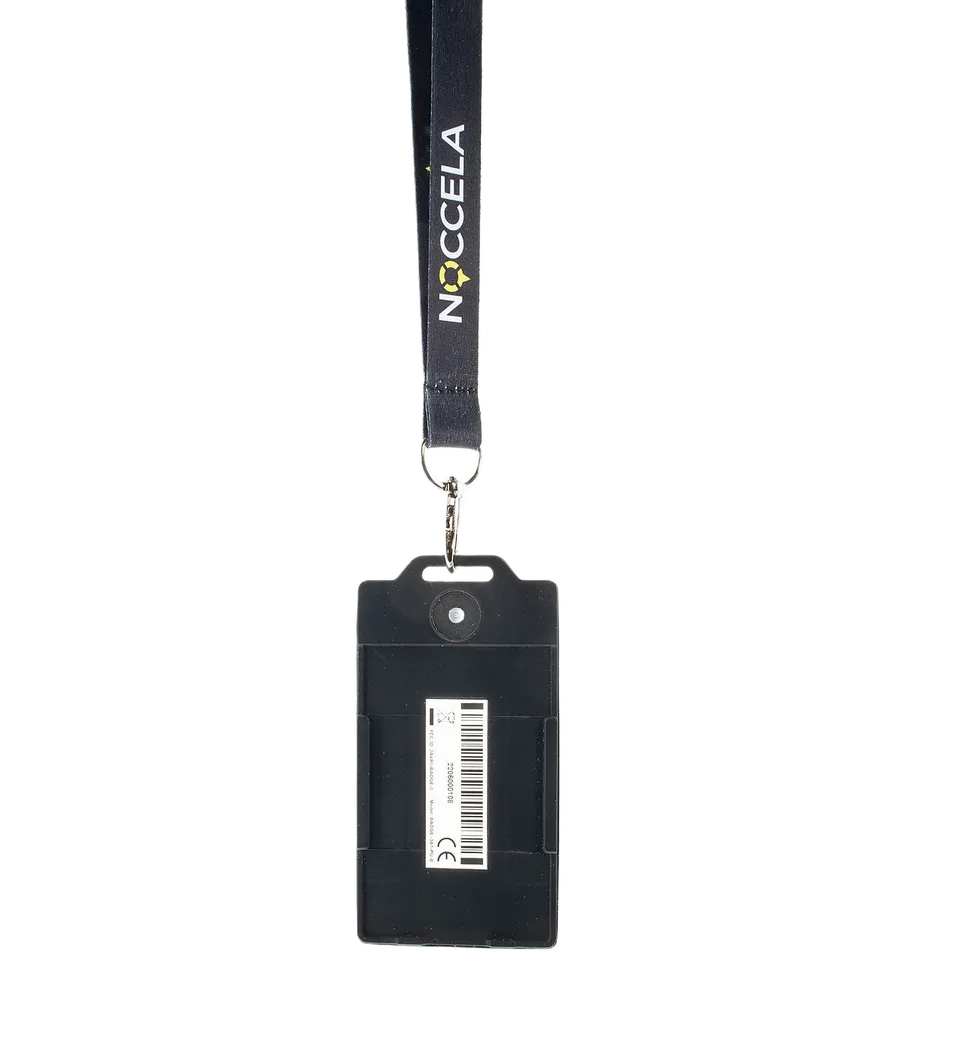
ID Badge
Wearable personnel badge with a call button, LED and buzzer.
Details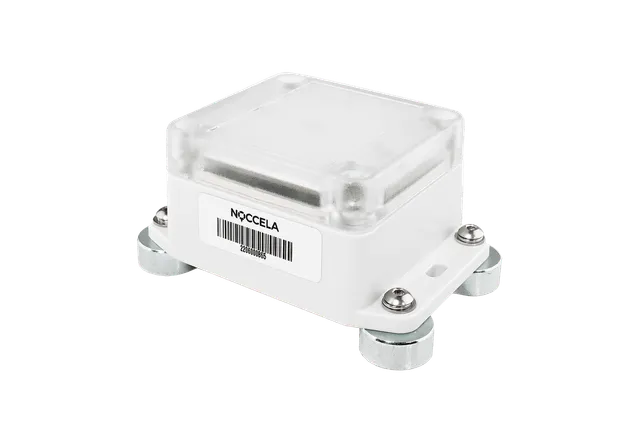
Industrial Tag
IP65 tag for vehicles, machines and harsh conditions.
Details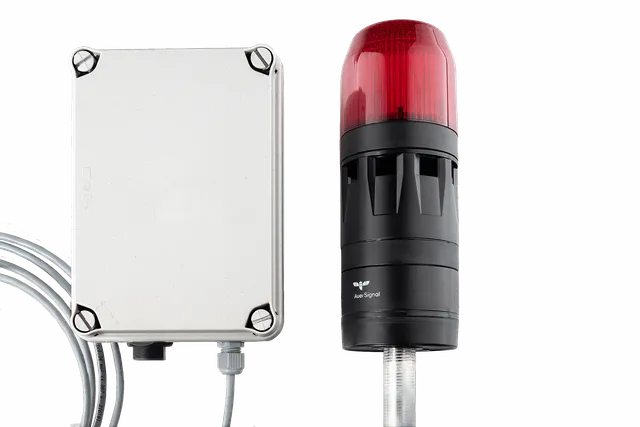
Signalling Flash
Location-triggered light and tone for zone warnings and andon status.
Details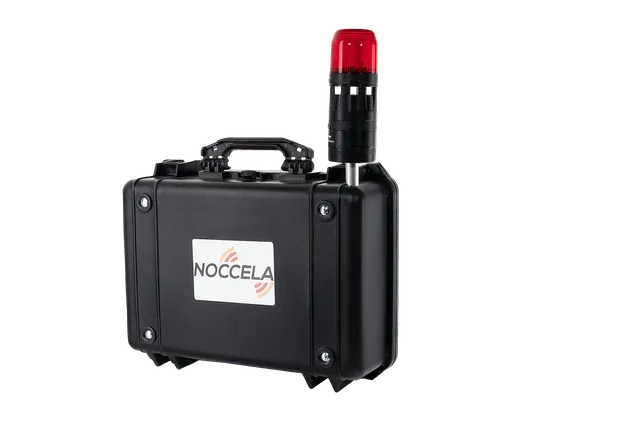
Mobile Anchor with Flash
A base station, signalling flash, battery and LTE router in one rugged case.
Details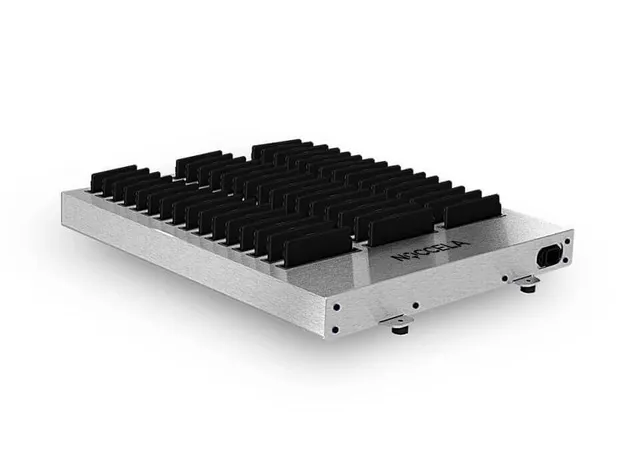
ID Badge Charging Dock
48-slot charger for ID Badges at shift change and clock-in gates.
Details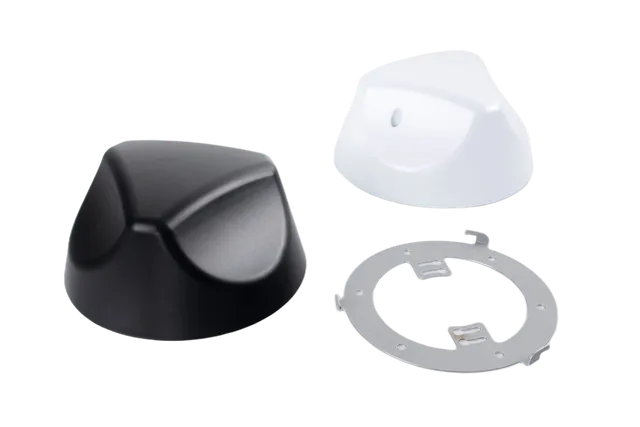
Beacon 3
Compact PoE base station for indoor sites, installed like a security camera.
DetailsCase study
Konecranes Hyvinkää: alerts on the shop floor
A pilot with four scenarios: forklift proximity, high-voltage test benches, lone workers in danger zones and restricted areas.
Konecranes · Manufacturing
Forklift proximity alerts, danger zones and lone-worker messages in a safety pilot
Hyvinkää, Finland
- Project phase
- Pilot
- Alert scenarios
- 4
- Warnings on the badge
- Buzzer and LED
- Supervisor alerts
- Text message
The pilot used the site’s existing Noccela infrastructure. Badges beeped and flashed at set distances, and supervisors received text messages about lone workers and unauthorised entries.
Guide: forklift collision avoidance, warnings and machine safety
Send safety events to your systems
Zone and proximity events can go to your safety, alarm and building systems. Any speed reduction or stop is engineered and certified by the machine builder or integrator.
Events and webhooks
Text messages
Signals at the zone
Also for tunnels, underground logistics and sites without GPS
UWB does not need satellite signals, so proximity warnings, zone alerts and evacuation roll-call also work in tunnels, underground logistics areas and the workshops of mining sites. Noccela devices are not certified for explosive atmospheres; where certified equipment is required, talk to us first. Integrators of tunnel and mining safety systems are welcome to contact us.
Frequently asked questions
Does Noccela’s forklift safety system stop the truck?
Which safety standards does it comply with?
Is it ISO 3691-4 compliant?
What is the difference between a warning system and collision avoidance?
Can it be connected to a forklift to slow it down?
How common are forklift and vehicle accidents?
Is tracking employees for safety legal in Finland?
Do we need a data protection impact assessment (DPIA)?
What do works councils typically require?
Does the system help with evacuation head counts and lone workers?
Talk to us about your site’s risks
Tell us where people and vehicles meet on your site. We will show you which alerts fit, and what the system does and does not do.