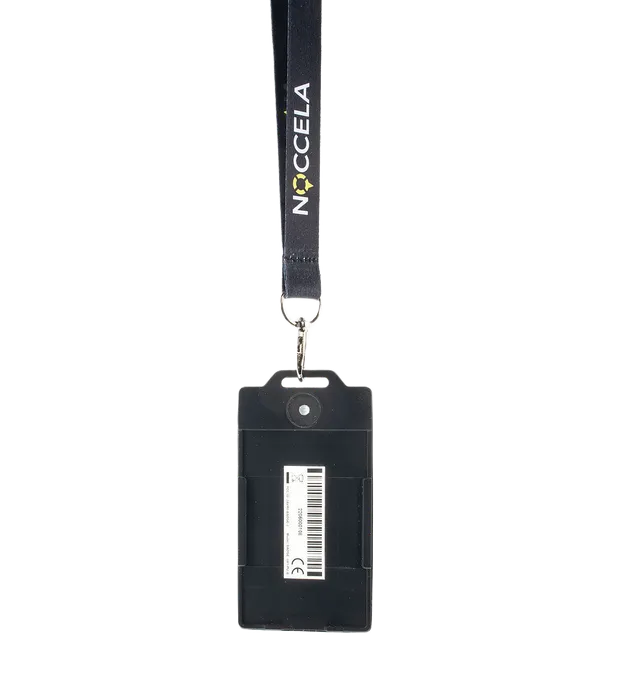
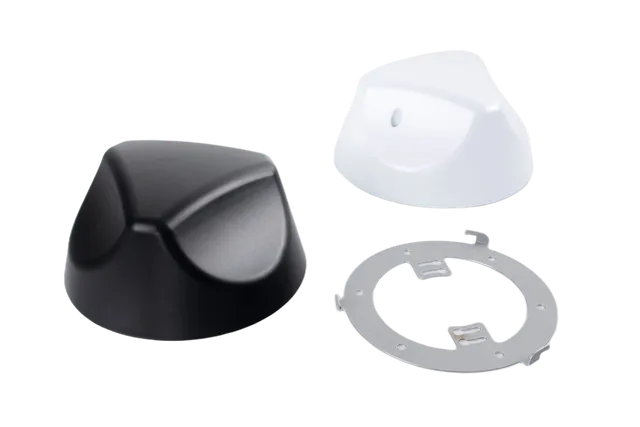
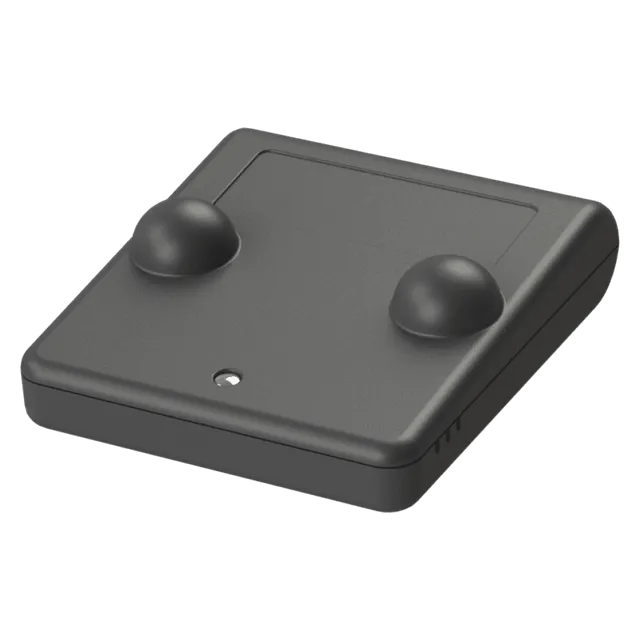
In a pilot at Konecranes’ site in Hyvinkää, Finland, Noccela ID Badges warned employees and forklift drivers when they came too close to each other, guarded high-voltage test benches and restricted zones, and sent text messages to supervisors about lone workers in danger zones. The pilot used Noccela as an alerting and awareness system: it helps people react in time, alongside physical separation, training and the machines’ own safety functions.
Background
Konecranes is a Finnish company, headquartered in Hyvinkää, that makes and services cranes and lifting equipment for ports, terminals, shipyards and industries such as automotive, metal production, pulp and paper, and wood processing.
The Hyvinkää site already had Noccela’s badges and infrastructure in place from an earlier workplace-safety application. The pilot extended the same infrastructure, with ID Badges and base stations (UWB anchors), to occupational safety on the shop floor.
Goals
The pilot set out to give safety warnings in four situations:
- Forklift drivers and the people near an operating forklift.
- People who come too close to dangerous equipment, here high-voltage test benches.
- A lone worker in a defined danger zone.
- Someone without authorisation entering a restricted zone.
Challenge
Accidents in which people and machines come too close are one of the main categories of workplace accidents, and forklifts are involved in a considerable share of them, with injuries that can be fatal. In Germany alone, 18,035 reportable accidents involved industrial trucks in 2024 (DGUV, Statistik Arbeitsunfallgeschehen 2024).
Slips, trips and falls are another large group. They are especially serious when someone works alone and nobody notices that they need help. Besides the human impact, the costs of worker compensation and liability insurance for internal logistics had been rising.
Solution
- Forklift proximity alerts. The badges of forklift drivers and of other employees are told apart in the platform. When an employee is closer to an operating forklift than the distance set in the platform, the badges beep continuously and blink their LED. The distance is measured directly between the devices (peer-to-peer ranging).
- Test-bench zones. The same alert protects high-voltage test benches: a tag is attached to the bench, and badges warn when someone comes too close.
- Lone-worker messages. Base stations in the identified danger zones count the people in each zone. If the count is one, the supervisor receives a text message on their mobile phone.
- Restricted zones. For each zone, the platform knows which badges are authorised. When an unauthorised badge enters, it beeps and blinks, and the person responsible for the area receives a text message.
Precise ranging lets the alert distance be set exactly. It is not a measure of safety integrity: no Performance Level or Safety Integrity Level is claimed, and the functions described here warn people rather than control machines.
Results
The public pilot material describes the benefits the site was looking for. It does not report accident statistics, and we do not claim any.
- Mutual awareness. Forklift drivers and the employees near them are warned at the same time, so both can act carefully.
- Danger zones defined on data. Information on where forklifts are most active can be used to identify and define danger zones.
- Fewer surprises in restricted areas. Alerts make people aware of danger zones and restricted areas, including storage areas where unauthorised employees should not pick up inventory.
- Support for lone workers. Text messages help supervisors make sure that people working alone in dangerous areas are safe, and a person who needs help can call for it.
Privacy
Badges worn by employees make this technical monitoring of employees. In Finland its purpose, introduction and methods go through the workplace co-operation procedure, and location data should not, as a rule, be used to monitor working hours. Deployments of this kind should be planned around a defined safety purpose, alerts that do not require storing movement trails, pseudonymised badges and short retention periods. Read more about hosting, security and data protection.
What’s next
The four scenarios of the pilot (forklift proximity, equipment zones, lone workers and restricted areas) are part of Noccela’s workplace safety solution today, together with evacuation roll-call at muster points. For the difference between warning systems and machine safety functions, read our guide to forklift collision avoidance.