Warehousing & logistics
Track pallets and forklifts live, and plan your warehouse on facts
Noccela follows pallets from arrival to departure and every forklift in between, with accuracy up to 10 cm. Use the data for FIFO, utilisation, heatmaps and layout changes you can measure.
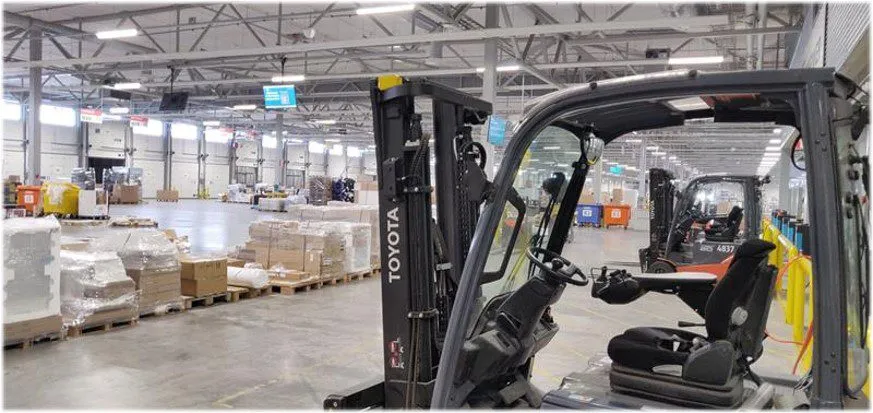
Why warehouses lose time and money
The three problems behind the DB Schenker project in Lieto are common to most terminals and distribution centres.
-
Layout changes by trial and error
Without route data, every new layout is a guess, and nobody can show afterwards whether it was better than the old one.
-
A large floor, few supervisors
A busy terminal is active everywhere at once. The few people responsible for it cannot see where pallets wait and where vehicles queue.
-
Idle time and empty driving
You cannot cut the cost of forklifts and pallet trucks without knowing when they stand idle and when they drive without a load.
What you can do with precise location
All of it runs on the same base stations (UWB anchors), tags and Location Intelligence Platform.
Pallets from arrival to departure
Forklift and pallet-truck utilisation
FIFO and dwell time
Heatmaps and congestion
Layout changes you can measure
Gates and geofences
How much accuracy do you need?
Pallet counts per area need less accuracy than marked walkways or stacked goods. Base-station density follows the need, area by area.
| Accuracy | Question it answers | Typical uses |
|---|---|---|
| Zone (a few metres) | Which area is the pallet in? | Counts in arrival, storage and departure areas; dwell time; gates |
| Sub-metre | Which lane or floor slot, which vehicle? | Floor storage, FIFO by lane, vehicle utilisation and routes |
| Up to 10 cm Up to 10 cm with Noccela | Which side of a line, which level of a stack? | Marked walkways and crossings, stacked goods, exact positions in floor storage |
How it works
From tag to WMS
Tags on pallets and vehicles send short UWB pulses. Base stations measure them, the positioning engine computes positions, and the platform turns them into counts, alerts and data for your systems.
- Step 1 Tags Badges and asset tags send short UWB pulses
- Step 2 Base stations Measure the radio signals and calibrate themselves
- Step 3 Positioning engine Computes positions in the cloud or on your premises
- Step 4 Location Intelligence Platform Maps, dashboards, alerts and workflows
- Step 5 APIs Real-time stream, HTTP API and webhooks
- Step 6 Your systems WMS, MES, ERP, BI, safety and sports apps
Products for warehouses
Indoor base stations, tags for pallets and vehicles, and warning lights for crossings.
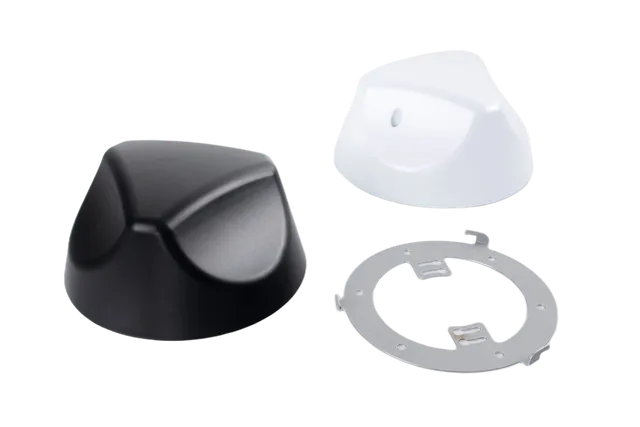
Beacon 3
Compact PoE base station for indoor sites, installed like a security camera.
Details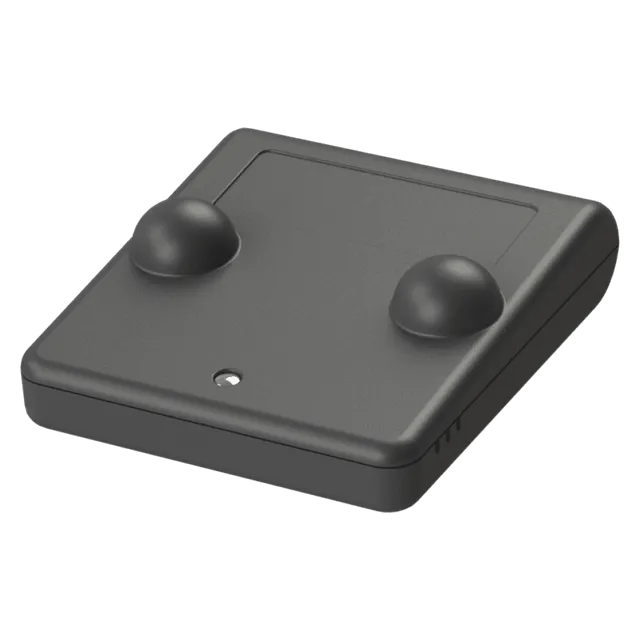
Smart Tag
Small asset tag for tools, carts, pallets and equipment.
Details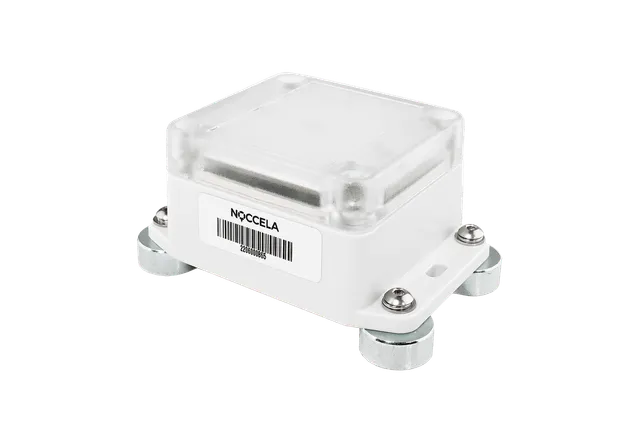
Industrial Tag
IP65 tag for vehicles, machines and harsh conditions.
Details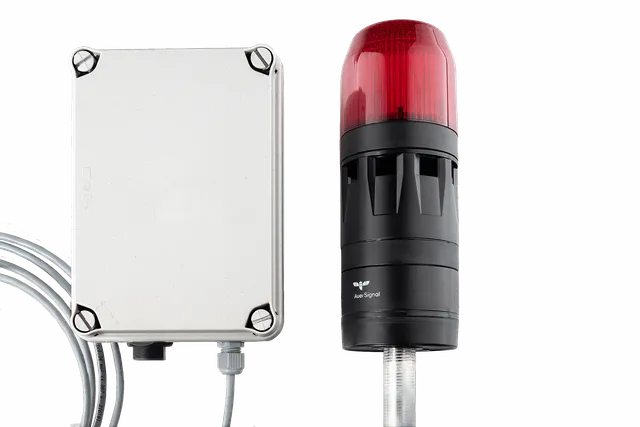
Signalling Flash
Location-triggered light and tone for zone warnings and andon status.
DetailsCase study
DB Schenker: 36 base stations for 12,000 m²
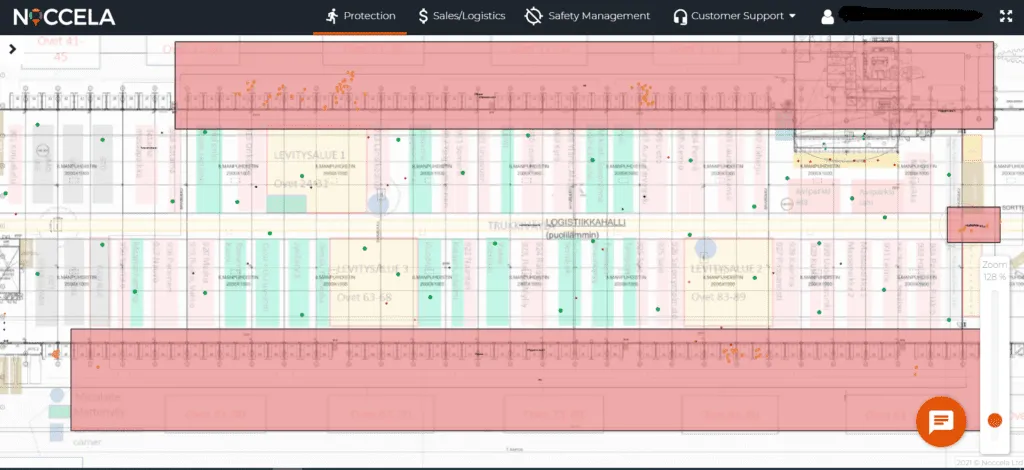
With Turku University of Applied Sciences, in the Baltic Loop project: pallets tracked from harbour arrival to departure, FIFO checked, and every vehicle route recorded for layout analysis.
DB Schenker · Logistics
Pallet tracking and FIFO in a 12,000 m² terminal with 36 base stations
Lieto, Finland · With Turku University of Applied Sciences
- Area covered
- 12,000 m²
- Base stations
- 36
- Accuracy achieved
- 30–150 cm
- Tracked
- Pallets, forklifts, pallet trucks
Connect location to your WMS and BI
Open APIs deliver live positions, history and events to the systems you already run.
Real-time stream
Events and webhooks
Cloud or on-premise
Frequently asked questions
How many base stations does a warehouse need?
What accuracy do we get in a warehouse?
Do we have to tag every pallet?
Can it check FIFO automatically?
How long do tag batteries last?
Can the data go into our WMS?
Can we run it on our own servers?
Can the same system warn pedestrians about forklifts?
See your terminal on a live map
Send us a floor plan and tell us what moves through your warehouse. We will show you how it would work, and what it takes.