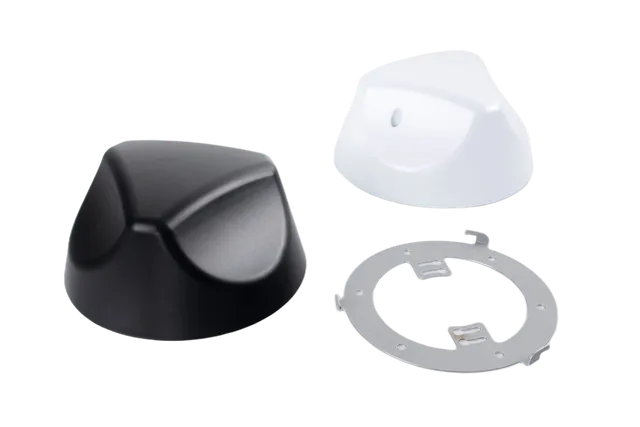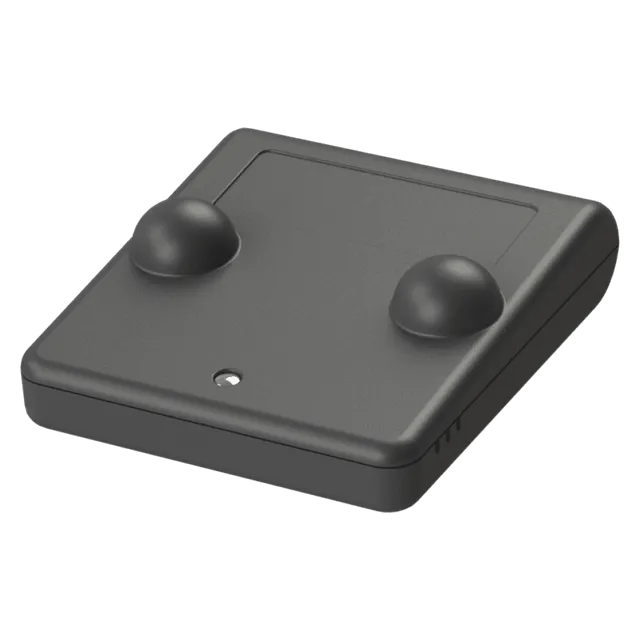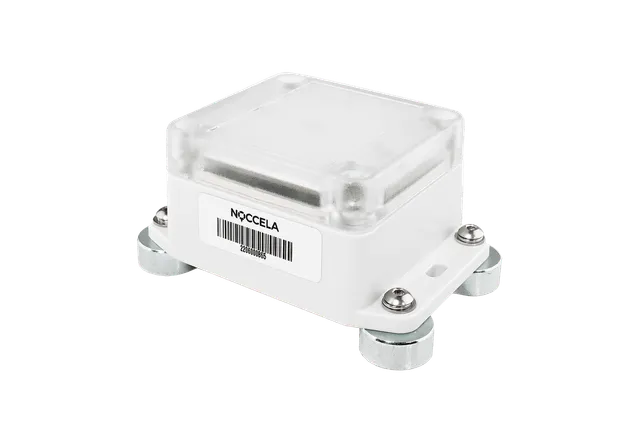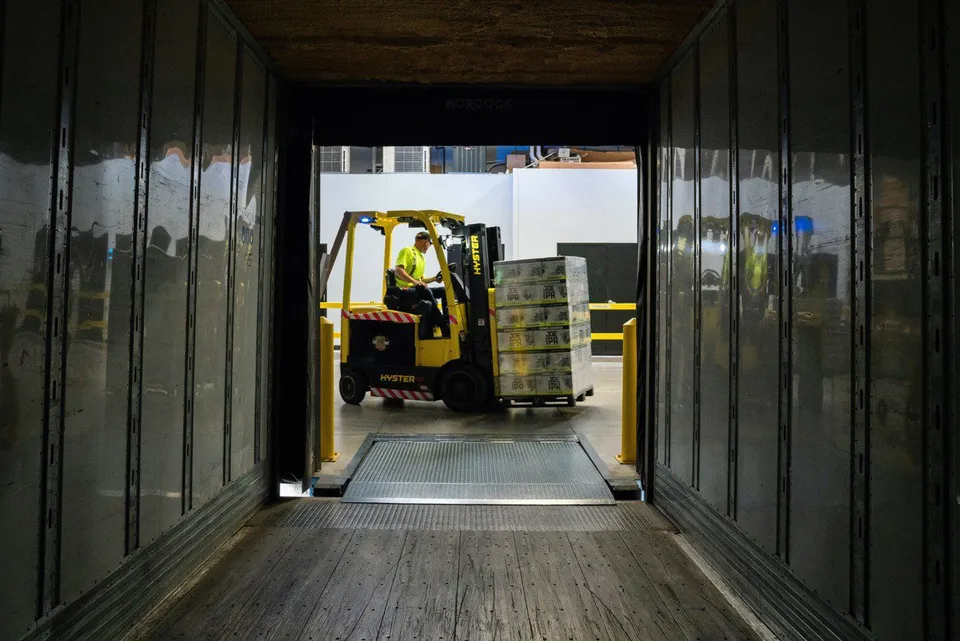
In DB Schenker’s logistics centre in Lieto, 36 Noccela base stations (UWB anchors) covered the 12,000 m² active warehouse area and tracked pallets and vehicles from arrival to departure. The project was run by Turku University of Applied Sciences as part of the Baltic Loop project, to find improvements in terminal operations based on measured facts rather than trial and error.
Background
DB Schenker is a global logistics company with more than 140 years of history. Its logistics centre in Lieto, Finland, receives pallet shipments from abroad, stores them and sorts them by destination city for delivery within Finland.
Turku University of Applied Sciences (Turku UAS) combines research, development and innovation work with teaching, involving students, teachers and project professionals. In this project, its researchers used real-time location data to find improvement points in the terminal’s operations. Noccela supplied the location system.
Goals
The system had two jobs:
- Real-time visibility of moving vehicles and pallets across the whole warehouse.
- Route data for analysing pallet flows and what contributes to lead times, so that the warehouse layout could be optimised on facts.
Challenge
- Layout by trial and error. The terminal had changed its layout several times to meet the service levels it offers its customers. Each change left the same open question: was this the best possible result?
- A large floor, active everywhere at once. The whole 12,000 m² area is in use at the same time, which makes detailed control difficult for the small number of people responsible for it.
- Constant vehicle movement. Traffic across the vehicle areas was identified as a risk, so the number of forklift and pallet-truck movements needed to be optimised.
- Unknown idle time and empty driving. Without data on when forklifts and pallet trucks stand idle or drive with or without a pallet, operating costs are hard to control. Pallet trailers can move more pallets per round, but nobody knew when using them would pay off.
Solution
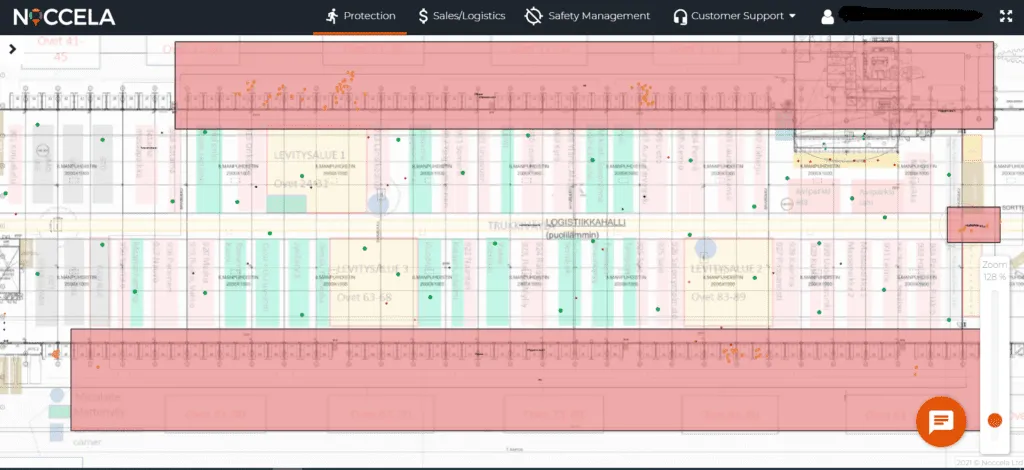
- Coverage: 36 base stations covered the 12,000 m² area. The low number of base stations kept the capital cost of the system down.
- Tags on vehicles and pallets: vehicle tags and pallet tags were told apart in the platform, and vehicles were typed as forklift, pallet truck or pallet trailer.
- From harbour to departure: a tag was attached to each pallet when it arrived from the harbour and removed when the pallet was loaded for onward transport.
- Gates as geofences: all arrival and departure gates were geofenced. If a tag left the premises, it beeped continuously.
- Every route recorded: position, travel time, distance, idle time and idle position were stored for every tag, and heatmaps could be generated for analysis.
- Data out: positions were computed by Noccela’s cloud positioning engine and made available for analysis and reports through the API.
Results
- Full visibility. The numbers of pallets in the arrival and departure areas, pallets on the move and all moving vehicles were known and counted remotely.
- Utilisation by vehicle type. Movement times with and without pallets showed the utilisation of forklifts and pallet trucks, and the situations where a pallet trailer would be the better choice. That gave the terminal more control over its costs.
- FIFO and dwell time. Because a pallet is tracked from arrival to departure, its tracking time equals its time in the warehouse. Pallets that broke the first-in, first-out rule, or stayed longer than their service level allowed, were easy to detect.
- Layout changes measured on facts. Layout and routes could be optimised from data, and each improvement measured with one simple KPI: the time pallets spend in the warehouse. The plan could be tuned to the service levels of different pallets while keeping vehicle traffic safe.
- Accuracy that fitted the job. The project achieved 30–150 cm, which met the requirements of pallet and vehicle tracking with a deliberately small number of base stations.
Vehicle routes can be linked to the people who drive them, so utilisation data should be used for the purpose agreed with employees in advance. Read more about hosting, security and data protection.
What’s next
The public project material ends with a way of measuring rather than a roll-out plan: any further layout change can be judged by the same KPI, the time pallets spend in the terminal. The same capabilities, from pallet FIFO to forklift utilisation and heatmaps, are part of Noccela’s solution for warehousing and logistics.