Healthcare & care facilities
Precise location for hospitals and care facilities
UWB real-time location for staff safety, patient care and equipment, with sub-metre zones where precision matters. Hosted on-premise or in the cloud, designed in Finland and delivered with healthcare solution partners.
Three problems on every ward
Care facilities run on limited staff time. Location answers three questions that otherwise cost minutes, many times a day.
-
Searching for equipment
Pumps, wheelchairs, beds and monitors are somewhere in the building. Every search takes time that staff would rather spend with patients.
-
Calls for help without a location
A staff alarm or a resident’s call is only as useful as the responder’s knowledge of where to go.
-
Residents who wander
In memory care, doors stay locked because staff cannot see who is near an exit. Precise zones make it possible to keep more doors open.
Where precision changes the outcome
Six capabilities on one infrastructure, from staff safety to equipment finding.
Staff safety badge and call button
Equipment and bed finding
Alarm zones, wander alerts and evacuation
Call points that know where they are
Senior care alerts
Child care and play areas
Which accuracy do you need?
Healthcare location systems are sold in accuracy classes. Choose the class each use case needs; UWB covers the top of the ladder.
| Accuracy class | Question it answers | Typical technologies | Typical care use cases |
|---|---|---|---|
| Near-room | Which ward or corridor? | Bluetooth signal strength, Wi-Fi | Rough location of mobile equipment |
| Room-certain | Which room? | Infrared, ultrasound | Room-based workflows such as nurse-call presence |
| Bay or bed | Which bed or bay? | Dense infrared or ultrasound, UWB | Multi-bed rooms, bedside equipment |
| Sub-metre UWB | Which side of the door, which bed, which device? | UWB, Bluetooth angle of arrival | Exit zones, staff alarms, equipment in crowded rooms |
If you only need to know which room something is in, room-level technologies can be cheaper. UWB pays off where sub-metre zones, long tag battery life and two-way alerts matter, and it can run alongside other systems. Read UWB vs Bluetooth for the details.
How it works in a ward
Ceiling base stations (UWB anchors), badges, buttons and tags, rules in the platform, and alerts where staff will see them.
-
Base stations on the ceiling
Beacon 3 base stations take power and data over one Ethernet cable. Measure two, and the rest calibrate themselves.
-
Badges, buttons and tags
Staff wear ID Badges, call points are Andon Buttons, and equipment carries Smart Tags. Patients and residents wear a tag only when there is a care reason for it.
-
Rules and alerts
In the Location Intelligence Platform, you set zones, who is alerted and how: text messages, displays, signalling lights or your own systems through webhooks.
-
Hosted where you need it
Run everything on an on-premise server inside the hospital network, or as a cloud service.
Privacy, hosting and data protection
Locating staff and patients is sensitive. The system is built so that you decide what is recorded, who sees it and where it is stored.
-
On-premise or cloud
Run the positioning engine and platform inside the hospital network, or as a cloud service from an EU company.
-
Purpose first
Each use is defined in advance. Location data collected for staff safety is not used to monitor working hours or performance.
-
Staff consultation
Staff and their representatives are consulted before go-live, and patients or their representatives are told why a tag is used.
-
Pseudonymised badges
Badges can be mapped to roles instead of names, with access to identities limited to the people who need it.
-
Short retention
Alerts can run without storing movement trails, and you decide in advance how long events are kept.
-
No cameras, no audio
The system locates radio tags only. It records no images and no sound.
Products for care facilities
Indoor base stations, badges for staff, call points, asset tags and the charging dock for shift changes.
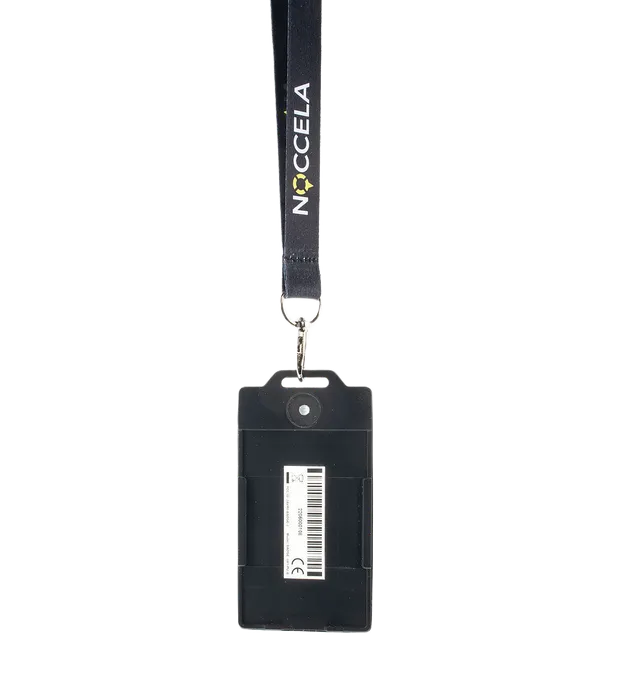
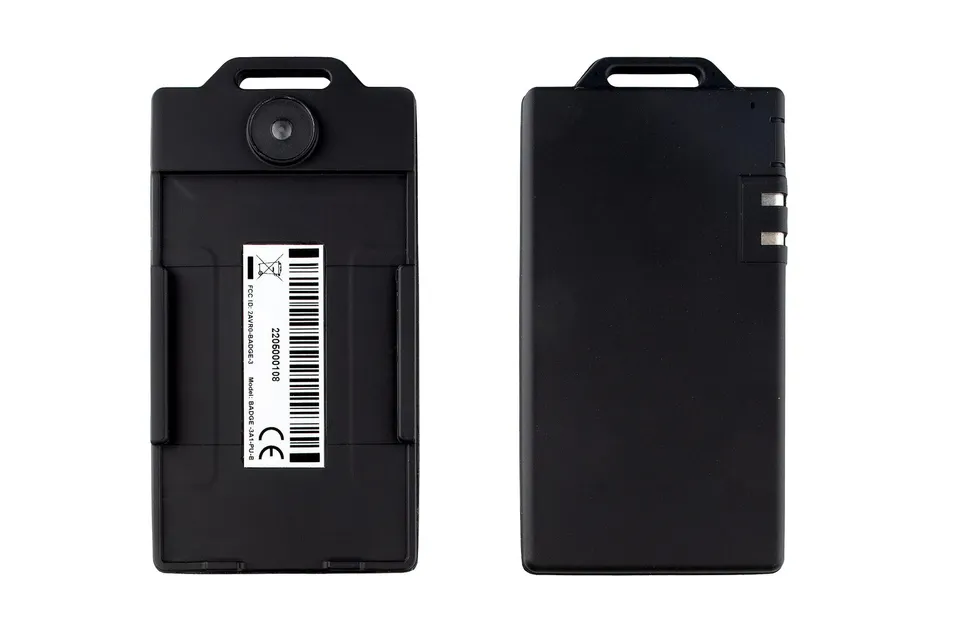
ID Badge
Wearable personnel badge with a call button, LED and buzzer.
Details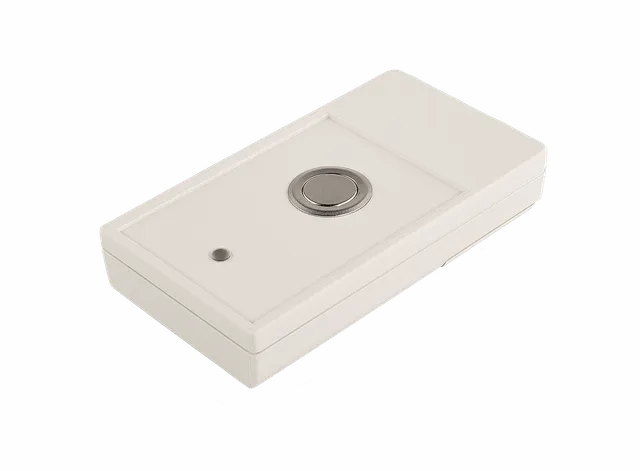
Andon Button
Wireless call button that sends its own location with every call.
Details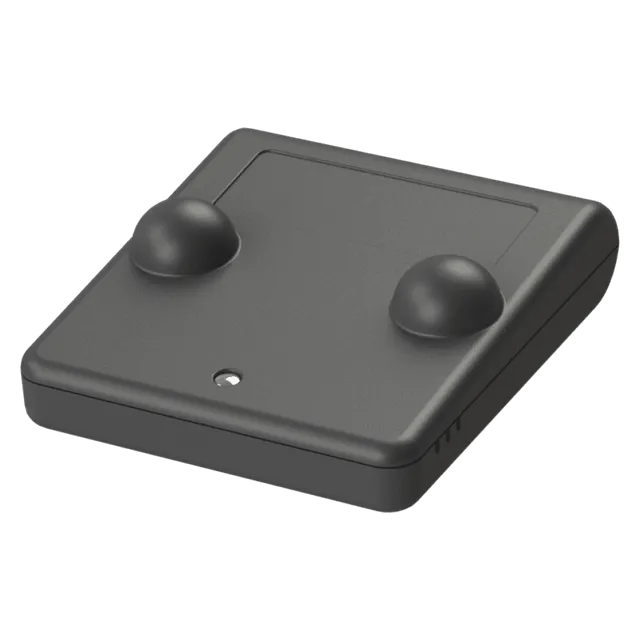
Smart Tag
Small asset tag for tools, carts, pallets and equipment.
Details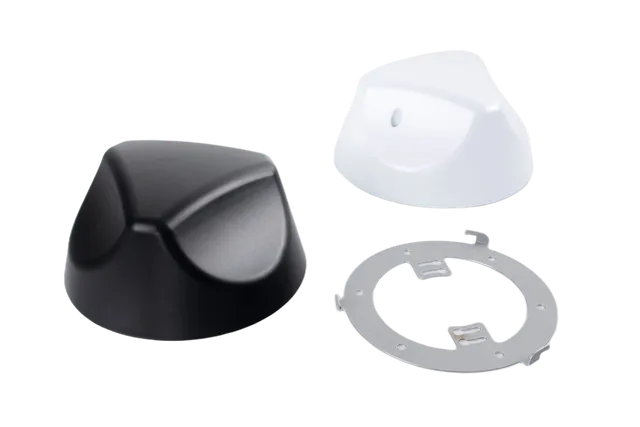
Beacon 3
Compact PoE base station for indoor sites, installed like a security camera.
Details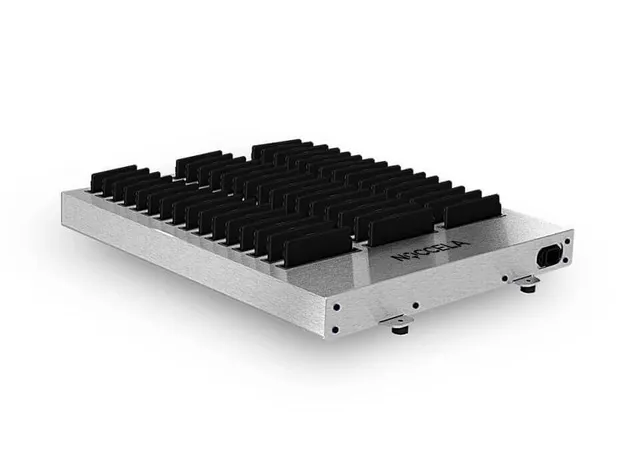
ID Badge Charging Dock
48-slot charger for ID Badges at shift change and clock-in gates.
DetailsOn-premise server
Proof
The technology, proven in other demanding sites
This page describes capabilities rather than named healthcare references. The capabilities a ward needs are the same ones running in public projects elsewhere.
- Positioning accuracy, up to
- 10 cm
- Coverage per base station, up to
- 500 m²
- Sealed, rechargeable ID Badge
- IP67
- Badges charged at once in the Charging Dock
- 48
Badges, zones and supervisor alerts
Finding tagged items on large floors
Delivered with healthcare solution partners
Care processes, nurse-call systems and hospital IT need local expertise. We work with partners who bring it, and supply the positioning, devices and APIs.
Frequently asked questions
Is this a medical device?
Which accuracy do hospital use cases need: room, bed or sub-metre?
Can the system run on-premise inside the hospital network?
How do staff call for help?
Do badges need charging, and can they be cleaned?
Can location events trigger nurse-call, alarm or display systems?
How is personal data handled under GDPR?
How long does a ward installation take?
Does UWB interfere with medical equipment?
Plan a care pilot
Tell us about your ward, care home or day-care centre and what you want to locate. We will propose a pilot with a solution partner.