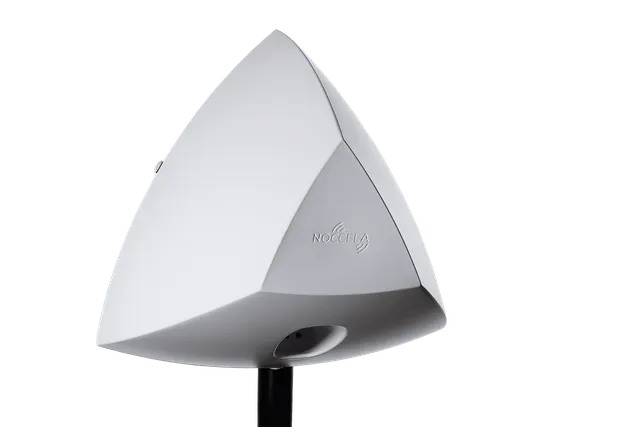
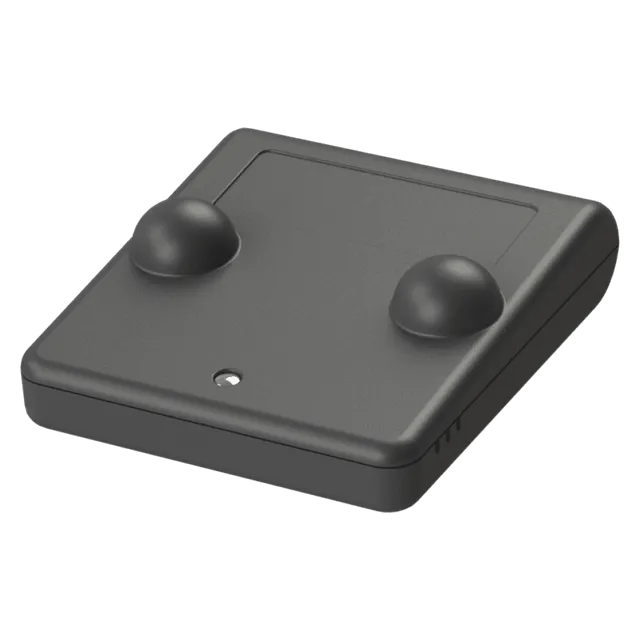
SPÅT, the sports-positioning unit of TKOMV Turku Oy, runs football player tracking on Noccela’s UWB system. Noccela developed its positioning for sport so that a pitch needs 16 base stations (UWB anchors) placed around the field instead of 36, with none above the players. That made the system cheaper to install, simpler to set up and suitable for fields without a roof.
Background
TKOMV Turku Oy was founded in 2019 and hosts football training, tournaments and the facilities for them at the LähiTapiola Areena in Impivaara, Turku. Its strategy is to stand out in all its services, including through technology.
SPÅT Sports Positioning is TKOMV’s business unit for sports analytics. It offers player tracking and analytics for school and junior programmes, elite club programmes, college programmes and events.
Goals
TKOMV was looking for a competitive advantage in football training and live entertainment. For that it needed a performance analytics tool built on player tracking that is affordable enough for its whole market, including junior players. The tool had to show the real-time positions and speeds of the players of several teams, with maps and graphs for analysis.
Challenge
- GPS was too expensive for juniors. Existing GPS-based systems were seen as too expensive for the junior player segment.
- Other radio technologies meant compromises. Local positioning technologies developed for other uses forced trade-offs between cost, performance, flexibility and scalability.
- Nothing can hang above a pitch. The usual indoor layout with base stations on the ceiling does not work for sport: football fields rarely have a ceiling, and balls would hit devices placed above the field.
- Too much hardware. In the first layout, a football field needed 36 base stations.
Solution
Noccela developed its positioning engine and its High-Performance Ranging (HPR) protocol for sports, and built a football analytics application that shows the real-time positions and speeds of the players of several teams, with maps and graphs.
- A perimeter layout. The positioning algorithm was developed so that no base stations are needed above the field. The base stations stand in a line around the pitch.
- From 36 to 16. With the perimeter layout, the number of base stations around a football field fell from 36 to 16 without a loss in performance.
- Cloud engine and API. Tags send their signals through the base stations to the positioning engine in the cloud, and the API delivers both real-time and historical data to the analytics application.
- Built on the core. Development focused on Noccela’s own positioning engine and radio communication, not on top of a third-party product, which kept the solution affordable, scalable and easy to integrate, and gave SPÅT flexibility in the co-operation.
Results
- 16 base stations per pitch, none above the field. Less hardware to buy, carry and install, and nothing in the way of the ball.
- A simpler set-up. The development reduced the hardware to install and simplified how it is set up.
- An analytics business on its own platform. SPÅT offers its sports analytics to clubs, schools and events, with Noccela’s positioning underneath.
Qorvo, Noccela’s UWB chip partner, has also described football tracking with 16 base stations around the pitch in its June 2024 blog story.
Privacy
Player positions and speeds are personal data, and many of the players are juniors. Agree the purpose of tracking with players, and with guardians where needed, keep only the data the analysis needs, and decide how long it is kept. Read more about hosting, security and data protection.
What’s next
The next step named in the project was mobility: set-ups that can move between tournament venues, with no fixed installation and no exactly measured base-station positions, thanks to automatic calibration. That is how Noccela’s sports set-up works today: Sports Beacons on fences, poles or tripods, power from a power bank through the Extension Box where there is no mains, and calibration by walking a tag to the corners of the field. SPÅT has since also used the system indoors, for athlete tracking at a youth basketball tournament in 2026.
See the solution for sports and animal tracking for how a pitch is set up.