Koskisen tracks wood-panel pallets and the forklifts that move them across a 25,000 m² manufacturing and stockpiling floor, using 160 Noccela base stations (UWB anchors). The aim was simple to state and hard to do on paper: know what is in stock, where it is and how material flows between storage and the machines.
Background
Koskisen Oy is a Finnish family company that processes wood into plywood, chipboard, lumber and thin veneer. On its manufacturing floor, forklifts bring wood panels to the machines that process them and take the processed panels back to storage.
Koskisen wanted to digitise its stock information and to get analytics data from the manufacturing floor, so that decisions about resources could be based on facts. The project was carried out together with DNA, the Finnish telecommunications group, and Nortal, a technology consultancy that specialises in digital transformation. It started as a proof of concept in 2021.
Goals
The project defined what the location system had to deliver:
- Real-time positions in three dimensions (x, y and z).
- Wood-panel pallets and the forklifts that carry them told apart.
- The properties of each panel bundle linked to the tag ID of its pallet.
- The time forklifts take to complete a workflow, and the time they drive without a pallet.
- Counts of pallets in stock and on the manufacturing floor near the machines.
- Workflows and heatmaps shown visually.
Challenge
Before the project, the stock of wood panels, both counts and categories, had to be kept track of by people. Supplying material to the machines needed staff to coordinate it. Forklift operators spent time keeping stock records up to date and searching for the material that a work order asked for.
Forklifts are expensive to run, so their use has to be efficient, and frequent forklift traffic on a busy manufacturing floor also calls for safety measures.
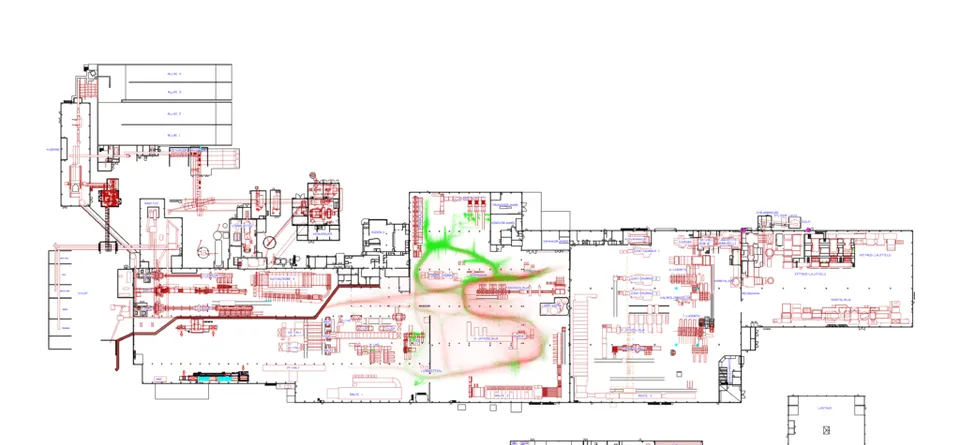
The floor itself was a demanding place for radio positioning. Noccela’s engineers used new tools to analyse and troubleshoot the radio conditions, and adjusted the number of base stations area by area to the accuracy each area needed. A radio-quality visualisation of the floor plan (shown at the top of this page) was used to measure the effect of each improvement.
Solution
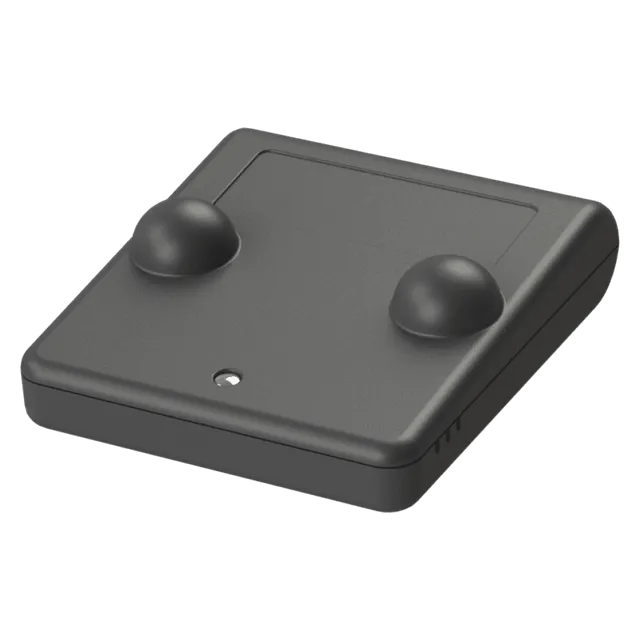
- Coverage: 160 base stations cover the 25,000 m² manufacturing and stockpiling floor. The accuracy requirement was 0.5–3 m, so base-station density was matched to that need rather than to the best accuracy the system can reach.
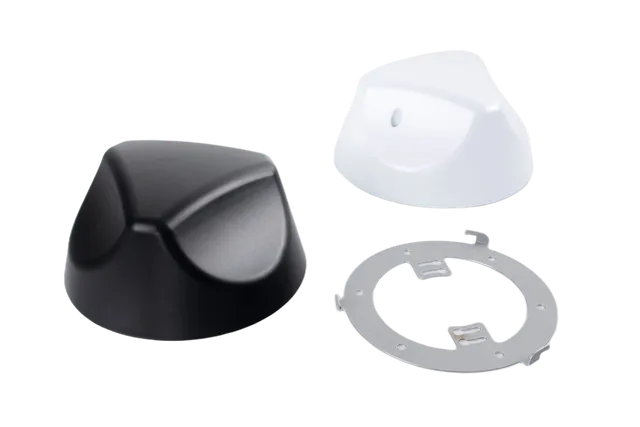
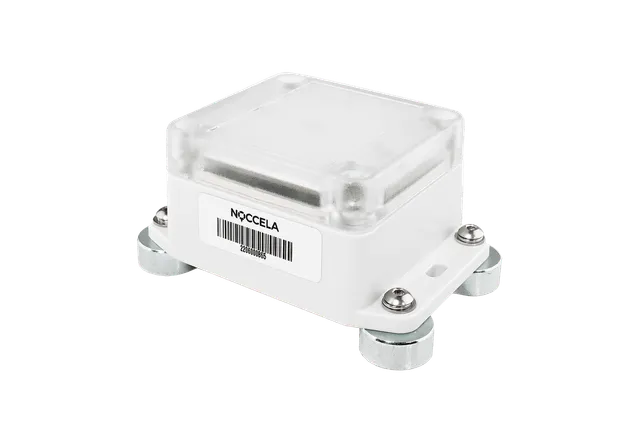
- Tags on pallets and forklifts: pallet tags and forklift tags are told apart in the platform, so the system knows which pallets are in storage, which are on the move and which forklift carries them.
- Item data on the tag: the properties of the wood panels are mapped to the tag ID of the pallet that carries them. A pallet’s position therefore also tells you what is on it.
- Data for analysis: positions are computed by Noccela’s positioning engine and stored for analysis and reports, and they are available to other systems through the API.
Results
The public project material describes what the system made possible on the floor:
- Instructive, paperless work orders. Panel properties and locations are known digitally, so a work order sent to a forklift can tell the driver where the right pallet is, instead of the driver searching for it.
- Timely supply and restocking. Panels reach the machines when they are needed, which avoids waiting, and processed panels are returned to storage on time, which avoids clutter on the manufacturing floor.
- Measurable forklift utilisation. Driving time with and without a load can be measured, which is the starting point for using fewer forklift hours.
- Better routes and busy zones. Forklift routes show where traffic concentrates, which helps optimise routes and identify busy and potentially dangerous areas.
- Height information. The z-coordinate adds the vertical position of panel pallets in the stockpile, which was not recorded before.
We do not publish savings figures for this project. To estimate the value for your own site, see what an RTLS costs and how to work out the return.
What’s next
The public project material does not describe later phases. The approach used at Koskisen (tag the carriers, link item data to the tag, and let the work order show the location) is the core of Noccela’s solution for manufacturing and intralogistics. If you want to see how it would work on your own floor plan, book a demo or start a pilot.